One kilo of Gir cow ghee takes roughly twenty to twenty-five litres of milk. At six to twelve litres a day, that is about a week of everything a single Gir cow produces, boiled down into one jar. Every argument about Gir cow ghee — the price, the colour, the aroma, the fakes — starts with that piece of arithmetic. Understand it and the rest of this page makes sense in about four minutes.
What follows is the honest version. Not every claim you have read about Gir cow ghee holds up, and pretending otherwise does you no favours when you are about to spend four to six times what regular ghee costs. So this page splits cleanly into two halves: what Gir cow ghee genuinely gives you, and what has been oversold to you. Both matter before you buy.
Gir cow ghee is clarified butterfat made from the milk of the Gir cattle breed, the humped, dome-foreheaded desi cow from the Gir forest and the Saurashtra districts of Gujarat. That is the whole definition. Everything else attached to the label is a separate claim that a seller has to earn independently.
There are three of those claims, and they get deliberately mashed into one another on most product pages. Breed is one thing: is the milk really from Gir cattle, or from crossbreds sold under the name? Feed is a second: was the animal grazing, or standing in a shed on concentrate? Method is a third: was it churned from cultured curd the bilona way, or spun out of cream by machine in an afternoon? A jar can be honestly Gir and still be grain-fed cream ghee. A jar can be genuinely bilona and made from crossbred milk. The premium ones are all three at once, and that is exactly why they cost what they do.
Ask any seller those three questions separately. The answers you get will tell you more than any certification badge on the label.
Ghee is close to pure milk fat. India's own FSSAI standard puts the floor at 99.5% milk fat and caps moisture at 0.5%, which means there is almost nothing else in there — no protein worth counting, no carbohydrate, no lactose beyond traces. When people talk about the nutrition of ghee, they are really talking about the composition of the fat and the fat-soluble vitamins riding along inside it.
Break a tablespoon (about 14 g) down and you get roughly 14 g of fat, of which around 9 g is saturated, about 4 g monounsaturated and a little under half a gram polyunsaturated. Vitamin A comes in near 100–110 micrograms of retinol activity — a useful slice of a day's requirement from a single spoon — with vitamin E, vitamin K and, in pasture-fed fat, the K2 form as well.
Two fatty acids get named constantly and both deserve the attention. Butyric acid (butyrate) makes up roughly three to four per cent of milk fat and is the short-chain fat that colon cells burn as their preferred fuel. Conjugated linoleic acid sits at a fraction of a per cent, but grass-fed dairy fat commonly carries two to three times the CLA of grain-fed, which is the single clearest nutritional consequence of how the cow was actually raised. Pasture also pulls the omega-6 to omega-3 ratio closer to 2:1, against 5:1 or worse from grain-heavy sheds.
The deep golden colour is beta-carotene. Bos indicus milk fat carries more of it than European breeds do, and grazing pushes it higher still. That is a real signal — with one caveat we will come back to, because colour is also the easiest thing on this list to fake.
Here is the part almost nobody selling ghee will tell you, and it is worth reading twice.
A1 and A2 refer to two forms of beta-casein, a milk protein. Gir is a Bos indicus breed and carries the A2A2 genotype, so Gir milk is genuinely A2 milk — that part is straightforward genetics, not marketing. But clarification strips the milk solids out. Ghee is 99.5% fat. Whatever beta-casein was in the milk is left behind in the residue at the bottom of the pan.
"A2 ghee" is not doing what "A2 milk" is doing. If you react badly to A1 dairy, the protein was never the thing that survived into the ghee jar. Anyone selling you Gir ghee on the promise that the A2 protein will fix your digestion is selling you a benefit that got removed during clarification.
So does the breed still matter for ghee? Yes, but through a different door. It matters because Gir milk runs at roughly 4.5% fat, well above what a high-volume crossbred gives, and because those animals are typically grazed rather than pushed. Higher fat, more carotene, more CLA, and a fat profile shaped by pasture. The A2 genotype is a reliable marker that you are dealing with a genuine desi herd. It is just not, by itself, the health mechanism. If the A2 protein is what you are after, drink the milk — start with what A2 milk is, and the A1 vs A2 breakdown covers exactly what that difference does.
Two routes lead to a jar of ghee. The industrial route separates cream from fresh milk, churns it mechanically into butter, and clarifies it. Fast, high yield, and perfectly legitimate as ghee.
The bilona route takes the long way. The whole milk is set into curd overnight with a culture. That curd is then hand-churned with a wooden bilona, which throws out butter and leaves behind traditional buttermilk. The butter is then simmered slowly over low heat until the water cooks off and the solids brown.
What the fermentation step genuinely changes: aroma and flavour, decisively. Culturing generates diacetyl and short-chain acids that a cream-separated ghee simply never develops, which is why bilona ghee smells nutty and faintly caramel while commercial ghee smells mostly of cooked butter. It also changes crystallisation — slow-cooked cultured butterfat sets grainy, the danedar texture, rather than into a smooth uniform block.
What it does not change nearly as much as the marketing suggests: the headline fatty acid and vitamin numbers. Those are driven far more by the cow's diet and breed than by whether a wooden churn or a steel one did the work. Bilona is a real quality signal, and it costs real labour and yield — but it is a signal about care and sourcing, not a nutritional transformation. Buy it for the flavour and for what it tells you about the dairy. Do not buy it expecting a different vitamin panel. If you want the longer version of what slow-churned desi ghee tastes and behaves like in the kitchen, this walkthrough of desi A2 Gir cow ghee goes further into the making.
Read that last row carefully. Both are ghee. Both are predominantly saturated milk fat and both carry fat-soluble vitamins. The gap between them is real but it is a gap of degree and provenance, not of category. Anyone telling you regular ghee is harmful and Gir ghee is medicine is overselling one and slandering the other.
Four claims survive scrutiny comfortably. They are not dramatic, and that is rather the point.
It is genuinely easy on a lactose-sensitive gut. Clarification removes essentially all the lactose and casein. If dairy leaves you bloated but you have an intolerance rather than a diagnosed allergy, ghee is usually the one dairy fat you can keep. This is the most reliably true statement on the whole page. People with a true milk allergy should still stay away, because trace protein is not zero protein.
It carries butyrate, and butyrate feeds the colon. That colonocytes preferentially metabolise butyrate is settled biochemistry. The honest caveat is scale: most of the butyrate in your gut comes from your own microbes fermenting fibre, not from the three or four per cent in a teaspoon of fat. Ghee contributes. It does not carry the load. Eat your fibre.
It unlocks the vitamins in the rest of your plate. Vitamins A, D, E and K need fat present in the same meal to be absorbed properly. A spoon of ghee over dal, sabzi or khichdi is doing quiet, real work on everything else in the bowl. This is the most underrated entry on the list and the best argument for the traditional Indian habit of finishing a dish with ghee.
It is the right fat for Indian heat. Ghee smokes around 250°C, well above butter's 150°C and above most refined oils. It handles tadka, deep-frying and dry-roasting without degrading, and because it has no water or milk solids left, it does not burn or spit. For high-heat Indian cooking there is no better-behaved fat in your kitchen.
Add one more that is traditional rather than clinical but harmless and widely loved: applied topically, ghee is an excellent occlusive for cracked lips, dry heels and winter skin. It works the way any rich lipid works. Keep it off acne-prone facial skin.
This is the section most Gir ghee pages leave out, which is precisely why it belongs here.
Weight loss. The CLA argument gets stretched past breaking point. CLA has been studied for effects on body composition and the human results are modest and inconsistent — and the doses used in trials are far above what a teaspoon of ghee delivers. Meanwhile a tablespoon is 123 calories of pure fat. Ghee can absolutely sit inside a weight-loss diet, because satiety and flavour help people stick to one. It is not a fat burner. Adding spoons of it to your morning coffee in the belief that it melts fat is arithmetic working against you.
Heart health. Ghee is roughly two-thirds saturated fat. The grass-fed omega ratio and CLA content are genuine points in its favour, and the blanket demonisation of dairy fat has softened considerably in recent nutrition research. But no major dietary guideline anywhere recommends increasing saturated fat intake, and if you have raised LDL or existing cardiovascular risk, "it's Gir ghee" is not a reason to pour more of it. Moderation is doing the work here, not the breed.
Memory and brain function. Yes, the brain is fat-rich. No, that does not mean eating fat improves cognition. The omega-3 content of ghee is small, and the traditional Ayurvedic use of ghee as a carrier in medicated preparations like Brahmi ghrita is a claim about those herbs and that formulation, not about ghee on your roti. Treat it as heritage, not as a nootropic.
Joint lubrication. Ghee does not lubricate your joints. The phrasing comes from a metaphor in classical texts about snehana, and it has been read literally by a generation of product copywriters. Fat-soluble vitamin absorption and general anti-inflammatory effects are plausible and worth having. Cartilage does not get oiled from the inside.
If a claim about Gir cow ghee would require you to eat significantly more of it, be suspicious of who is making the claim. Everything genuinely good about this ghee is true at one to two teaspoons a day. Nothing on this page gets better at five.
People search for Gir cow milk benefits and Gir cow ghee benefits as though they were the same question. They are not, and the difference decides which product you should actually be buying.
Milk keeps the parts ghee throws away. A glass of Gir cow milk gives you protein, calcium, phosphorus, B vitamins including B12, and the A2 beta-casein itself — the actual reason people who bloat on ordinary dairy often find they can drink this. If your problem is discomfort after regular milk, or you want the calcium and protein, the milk is the product that solves it. Ghee cannot, because none of that is in there.
Ghee keeps what milk dilutes. It concentrates the fat-soluble vitamins, the butyrate, the CLA and the beta-carotene into a stable, shelf-safe, high-heat cooking fat that a lactose-sensitive person can use freely. Milk cannot do that, and refrigerated milk will not survive your tadka.
Most households want both, for different jobs. If you are still deciding, the seven health benefits of A2 Gir cow milk covers the milk side properly, and the case for A2 milk and the full benefits breakdown go deeper on the milk side than this page has room for.
Sunrise A2 Milk churns its ghee from the milk of the same named Gir herd it delivers every morning in Jaipur. Nothing pooled, nothing bought in. You can trace the jar back to the animal.
Ghee is one of the most adulterated foods in the Indian market, and the premium tier is the most tempting target precisely because the margin is highest. Vanaspati, palm and other cheap fats get blended in; starch and colour get added to fake body and shade. None of these tests is a laboratory, but together they catch most of it. Run them the first time you open a new brand. The same logic applies upstream, incidentally — the checks for identifying pure desi cow milk are worth knowing if you buy the milk too.
Put half a teaspoon in your palm. Pure ghee melts almost at once from body heat alone and runs clear. If it sits there waxy and stubborn, something with a higher melting point has been blended in.
Melt a spoonful, pour it into a small glass jar and chill it. Real ghee sets unevenly, in layers of different texture and grain. An adulterated blend sets into one smooth, uniform block, often with the added fat separating as a distinct pale layer.
Genuine bilona ghee is danedar — visibly granular when set, because slow-cooked cultured butterfat crystallises coarsely. A perfectly smooth, glossy paste is a cream-separated ghee at best, whatever the label claims.
Warm a little in a pan. Cultured Gir ghee smells nutty and faintly caramel, and it fills the room. Blended ghee smells flat, oily, or of nothing much at all. Your nose is a better instrument here than you think.
Ask the brand which farm and which herd. A dairy that owns its supply will answer in one line. A repackager will send you a paragraph about heritage and never name a place. If you can visit, learn how to identify a Gir cow first and check the herd yourself.
Two figures settle it properly: the Reichert–Meissl value, which FSSAI sets a minimum for and which vegetable fat cannot imitate, and a negative Baudouin test, which rules out vanaspati. Ask for a recent report. Serious dairies have one.
Deep gold is a genuine sign of carotene-rich pasture-fed Gir milk. It is also the cheapest thing in the world to fake with a permitted food colour. Colour supports the other five checks. It never replaces them.
Back to the arithmetic from the top of this page, because the price is not a mystery once you do the sums.
A Gir cow gives six to twelve litres a day. Roughly twenty to twenty-five litres of that milk go into one kilogram of ghee. That is about a week of one animal's entire output for one jar — before you account for the fat lost to buttermilk during churning, the fuel burnt over hours of slow simmering, and the labour of doing it the bilona way instead of pressing a button.
Then stack the herd economics on top. A Gir heifer takes over four years to reach her first calving, against roughly two for a well-managed Holstein, and she calves on a fourteen-month cycle rather than a twelve-month one. She is a slower, lower-volume, more expensive animal to keep in milk. That cost has to land somewhere, and it lands in the ghee.
Which gives you a useful filter when you shop. If a jar is priced close to commercial ghee, the arithmetic does not close. Either the milk was not Gir, or the method was not bilona, or something else is in the jar. A genuinely cheap Gir bilona ghee is not a bargain you found. It is a claim that does not add up.
Indian dietary guidance puts total visible fat for an average adult somewhere in the region of 20 to 30 grams a day — and that budget covers every oil in your kitchen, not just the ghee. One to two teaspoons of ghee is five to ten grams. It fits comfortably. Four tablespoons does not, and no amount of breed pedigree changes that.
The best uses play to what ghee is actually good at. Finish hot food with it — a spoon over dal, khichdi, rice or a hot roti, where the aroma survives and the fat helps you absorb what is underneath. Use it for tadka and shallow-frying, where its 250°C smoke point genuinely outperforms butter and most refined oils. Roast vegetables in it. Swap it for butter in Indian sweets and short-crust baking, where the nutty note is a feature.
For babies, ghee is a traditional and sensible part of weaning food after six months, in small quantities — but the timing and amount are a paediatrician's call, not a blog's. For anyone managing cholesterol, diabetes or weight under medical supervision, fold the ghee into your existing fat allowance rather than adding it on top, and tell your doctor it is there.
Storage is simple, and the rules exist for a reason. Cool, dark, airtight, away from the stove. No refrigeration needed — ghee is shelf-stable for months at room temperature because there is almost no water in it to spoil. That last point is also the one rule people break: always use a dry spoon. A few drops of water in the jar introduces the moisture that shelf stability depends on not being there, and that is how a good jar goes rancid early.
The three questions at the top of this page — breed, feed, method — are the ones we would want answered before buying, so here are our answers — and who we are if you want the background first.
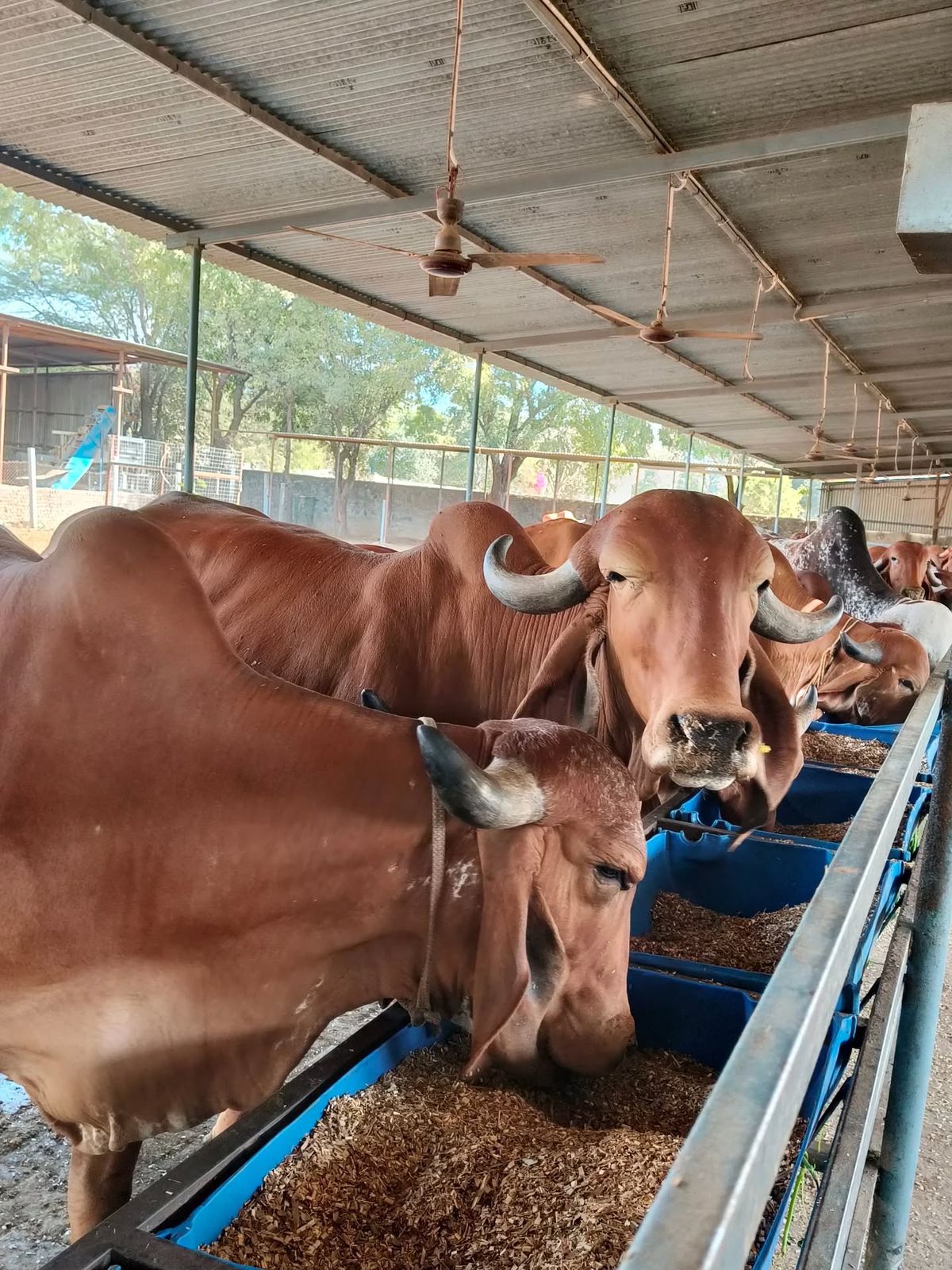
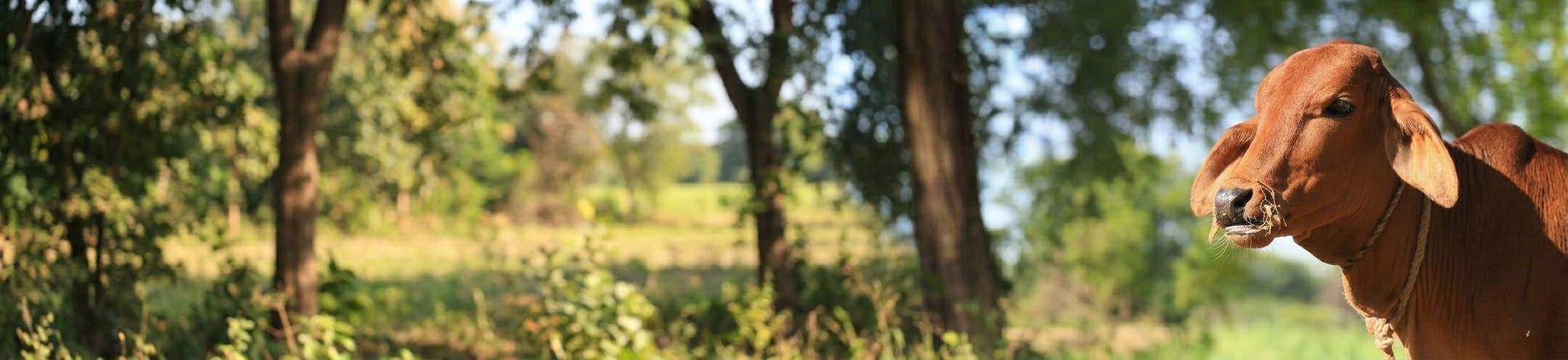
The milk comes from our own Gir herd, not pooled from a collection route. Same animals whose milk goes into the morning delivery. The cows graze rather than standing on concentrate, which is what puts the carotene in the colour and shifts the fat profile in the direction described above. The ghee is churned from cultured curd the bilona way and simmered slowly, which is why it sets grainy and smells the way it does. And the herd is not a stock photo — you can look at the cows themselves and see what a purebred Gir is supposed to look like before you decide whether ours are.
Run the six checks on our jar when it arrives. That is the point of publishing them. The ghee is one of several things that come off the same herd — the full range of A2 dairy products covers the rest.
Ghee is the concentrate. The milk is the source. Fresh A2 Gir cow milk delivered every morning across Jaipur — and the same herd behind every jar of ghee we sell.
Four hold up well: it is essentially lactose- and casein-free so lactose-sensitive people tolerate it, it carries butyrate that colon cells use as fuel, it helps you absorb the fat-soluble vitamins in the rest of your meal, and it cooks at up to about 250°C without degrading. Weight loss, heart protection and memory claims are considerably weaker than the marketing suggests.
The milk is — Gir carries the A2A2 genotype. The ghee is a different matter. A1 and A2 describe beta-casein, a protein, and clarification removes the milk solids, so almost no beta-casein survives into ghee. The breed still matters for ghee, but through fat content, carotene and CLA rather than through the A2 protein.
Roughly twenty to twenty-five litres at Gir fat levels of about 4.5%, before losses to buttermilk during churning. At six to twelve litres a day, that is close to a week of one cow's entire production for a single kilogram. This is the whole explanation for the price.
Almost always yes. Clarification leaves only traces of lactose and casein, which is why many people who cannot handle milk or butter use ghee freely. A diagnosed milk allergy is different from an intolerance, though — trace protein is not zero protein, so speak to your doctor first.
Not on its own. A tablespoon is around 123 calories of pure fat, and the CLA evidence for fat loss in humans is modest and inconsistent at doses far above what a teaspoon delivers. Ghee fits inside a weight-loss diet because fat is satiating and makes food worth eating. It does not burn fat.
One to two teaspoons, roughly five to ten grams, for most healthy adults. Indian guidance puts total visible fat near 20–30 g a day across every oil in the kitchen, so ghee has to share that budget. Everything genuinely good about it is already true at two teaspoons.
Melt half a spoon in your palm — real ghee goes clear almost instantly. Chill a melted spoonful and look for uneven, layered setting rather than a uniform block. Check for a granular danedar texture and a nutty, caramel aroma when warmed. Ask which farm it came from. For certainty, ask for a Reichert–Meissl value and a negative Baudouin test. Never judge on colour alone.
It is better in flavour, aroma and texture, and it tells you a dairy is willing to take the slow route. On the headline vitamin and fatty acid numbers the difference is smaller than most brands imply — those are driven far more by the cow's breed and diet than by the churn. Buy bilona for what it signals, not for a different nutrition label.
Low yield, high input, slow method. Twenty to twenty-five litres of milk per kilo, from a cow giving six to twelve litres a day, that took over four years to reach first calving and calves on a fourteen-month cycle — plus hours of hand-churning and slow simmering. Expect roughly four to six times commercial ghee. A cheap one is a claim that does not add up.
Different jobs. Milk keeps the protein, calcium, B12 and the A2 beta-casein itself — buy it if ordinary dairy upsets you or you want the nutrition. Ghee keeps the fat-soluble vitamins, butyrate and CLA in a shelf-stable, high-heat cooking fat that a lactose-sensitive person can use freely. Most households end up wanting both.
No. FSSAI caps moisture in ghee at 0.5%, and with almost no water there is nothing to spoil — it holds for months in a sealed jar in a cool, dark cupboard away from the stove. The one rule that matters: always use a dry spoon. Water in the jar is what turns good ghee rancid early.
Ghee is a long-standing part of Indian weaning food, usually introduced in small amounts after six months, and it supplies energy and fat-soluble vitamins at a stage when both matter. The timing and quantity should come from your paediatrician, who knows your child's growth and feeding pattern. Do not take that instruction from a blog, including this one.