
You can test the milk in your fridge tonight. Not with a lab, not with a kit — with a glass of water, a drop of iodine, a slanted plate and about ten minutes. Most of what gets added to milk in India gives itself away to a test you already have the ingredients for. This page walks through seven of them, in the order worth running, and then tells you honestly which problems no kitchen test will ever catch.
But first we have to clear something up, because the phrase "fake milk" is doing three completely different jobs in most conversations — and only two of them are actually a problem.
Adulterated milk is real milk that has had something cheap stirred into it. Water is the commonest by a wide margin. Then starch or flour to rebuild the body that the water took away, a pinch of detergent to restore the froth, sometimes urea to push up the solids reading, occasionally a preservative to stretch the shelf life. This is milk that started honest and got diluted. It is also illegal.
Synthetic milk is the genuinely alarming one, and the rarest. It contains little or no milk at all — a mix of water, cheap oil, urea, detergent and something white, whipped into a liquid that looks the part. It is a criminal operation rather than a corner-cutting one, it surfaces mostly around festival demand spikes, and it is nowhere near as widespread as WhatsApp forwards suggest. It is also the easiest of the three to catch, which we will get to.
Reconstituted or recombined milk is the third, and here is where most articles go wrong. This is milk powder mixed back into water, sometimes with milk fat added. It is legal, it is safe, it is used all over the world, and it must be declared on the label. It is not fake. It is simply not fresh, and if a brand sells it while the front of the pack says "farm fresh," the offence is the labelling, not the milk.
Milk powder is not poison and reconstituted milk is not a scam. Treating them as the same thing as urea and detergent muddles a real problem with a labelling one, and it makes it harder to spot the milk that genuinely should worry you. The tests below are aimed at the first two categories.
Run them in this order. The first three need nothing you do not already own. The fourth needs a bottle of iodine tincture from any chemist, which costs less than a packet of milk. Use raw or pasteurised milk at room temperature, and always keep a sample of milk you trust for comparison — almost every one of these tests is easier to read side by side than alone.
Tilt a clean steel plate or a glass tile and let one drop of milk run down it. Pure milk crawls, and leaves a visible white trail behind it. Watered milk runs off fast and leaves the surface almost clean. Ten seconds, no equipment, and it catches the single most common adulteration in India.
Put 5–10 ml of milk and the same amount of water in a bottle, cap it, shake hard for a few seconds. Clean milk throws a thin froth that collapses quickly. Detergent throws a thick, dense lather that sits there like soapy water — because that is exactly what it is. Detergent gets added to fake the creamy mouthfeel that dilution destroys.
Rub a little between your thumb and forefinger. Real milk feels smooth and slightly slippery, then dries clean. Synthetic milk feels distinctly soapy and stays slippery. Heat a spoonful too: it often turns yellowish and smells faintly chemical. A soapy feel plus a bitter aftertaste is the classic signature. Stop drinking it.
Boil about 5 ml of milk, let it cool, then add two or three drops of iodine tincture. It should stay brownish-yellow. If it turns blue or blue-black, there is starch in your milk — flour, arrowroot or rice starch added to thicken watered milk. This is the clearest positive on the whole list. Note that iodised table salt does not work; you need actual iodine tincture.
Take a teaspoon of milk, add half a teaspoon of soyabean or arhar flour, shake well and wait five minutes. Dip a red litmus strip for about thirty seconds. If it turns blue, urea has been added — it gets used to inflate the solids reading so diluted milk passes a lactometer. Both flour and litmus paper cost very little and this is the standard FSSAI field method.
Boil full-cream milk, cool it slowly and uncovered, and a proper layer of malai should set on top. A thin, patchy skin on milk sold as full-cream points to skimming or dilution. Judge this only against full-cream milk — toned and skimmed milk are legally lower in fat and will fail a test they were never meant to take.
A glass lactometer costs about as much as two litres of milk and settles arguments the senses cannot. Float it in a tall glass of well-mixed milk at room temperature and read where the surface cuts the stem. Cow milk normally reads around 28 to 30 CLR. Well below that means water. Well above it, with thin milk, means something was added to compensate.
Every one of these is indicative, not conclusive. A weak malai layer could be a cold kitchen. A low lactometer reading could be a cow late in her lactation. Two or three tests failing together is a signal worth acting on. One failing on its own is a reason to test again tomorrow, not to accuse your dairy.
Most of the panicked "my milk failed the test" posts online are not adulteration. They are method errors. Getting these five right is the difference between a test that tells you something and a test that just frightens you.
Testing cold milk straight from the fridge. Temperature changes density, so a cold sample will throw your lactometer reading off by a meaningful margin, and cold fat behaves differently on a slant. Let the milk come to room temperature first. Every reference figure you will find assumes it.
Not mixing before you draw a sample. Cream rises. If the milk has been standing, the top of the container is fat-rich and the bottom is fat-poor, and whichever you happen to scoop will mislead you in one direction or the other. Invert the container gently several times — not shaken to froth — before taking anything out.
Using a glass with soap residue in it. This one produces a spectacular false positive on the detergent test and people fall for it constantly. Rinse your test glass with plain water and let it dry, or you are testing your dishwashing liquid rather than your milk.
Judging toned milk by full-cream standards. Toned, double-toned and skimmed milk are legally defined lower-fat categories. They will give you a thinner malai layer, a paler chai and a lower reading, and none of that is a fault. Compare like with like, or the test is meaningless before you start.
Testing once and concluding. Milk varies genuinely from day to day — with the season, the cow's stage of lactation, and what she has been grazing. A single odd result is data, not proof. Run the same test three mornings in a row before you decide anything, and always keep milk you trust alongside as a control. Side by side, differences that are invisible on their own become obvious.
Adulteration is not random. Each addition solves a specific problem the previous one created, which is why they tend to travel together. Understanding the chain makes the test results far easier to read.
Read down that middle column and the pattern is obvious. Nobody adds starch to good milk. Starch is a symptom of water. Detergent is a symptom of water. Urea is a symptom of someone expecting to be tested. Find one and you have almost certainly found the whole chain.
India does not leave this to opinion. FSSAI sets minimum fat and solids-not-fat figures for every class of milk, and those minimums are what a lactometer and a fat test are actually checking against.
Two cautions on reading those figures. The exact minimums vary a little by state, so check your own state's notified standard rather than assuming one national number. And a lactometer measures density, not quality — which is precisely the loophole urea exploits. A reading inside the normal band tells you the milk has not been crudely watered. It does not tell you nothing was added. That is why the litmus and iodine tests matter alongside it.
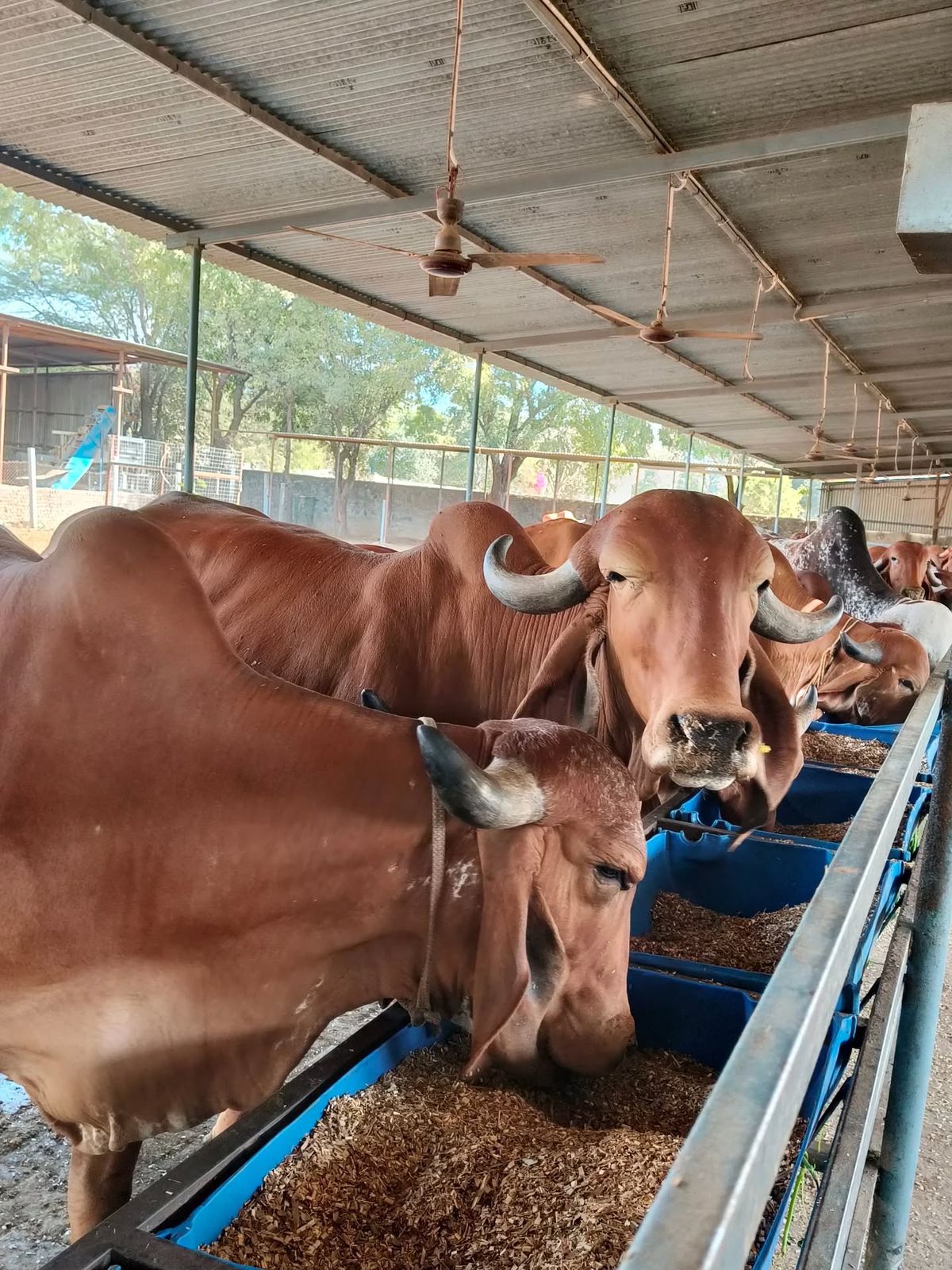
For reference, a purebred Gir cow runs near 4.5% fat, comfortably above the cow-milk floor. Rich milk is not proof of honesty on its own, but a dairy whose milk consistently sits well above the minimum has less reason to cheat and more to lose by trying.
Indian kitchens have been running quality control on milk for generations without a single instrument, and those habits are not folklore. They are just tests nobody wrote down.
Smell. Fresh milk has a faint sweetness and a warm dairy note. Heavily processed or reconstituted milk smells flat and cooked — the caramelised note comes from the heat it went through. Sourness means bacterial spoilage, which is a storage problem rather than an adulteration one, but it still means do not drink it.
Chai. Tea is a genuinely sensitive instrument, because milk fat and protein both have to behave for chai to come out right. Watered milk gives you pale, thin tea no matter how long you boil it. Milk carrying detergent throws far too much froth. Most Indian households can pick a bad batch from one cup, and they are usually right.
Curd. This is the slowest test and one of the most revealing. Good milk sets into firm, smooth dahi overnight. Diluted or starch-loaded milk sets weak and watery, and separates. If your curd stopped setting the way it used to and nothing else in your routine changed, the milk changed.
Where the senses fail is on anything colourless, odourless and dissolved. Urea has no taste at the levels used. Formalin has no visible effect. A confident palate is a useful first filter and a terrible last word, which is exactly why the ten-minute tests above exist.
Sunrise A2 Milk comes from our own Gir herd in Jaipur and reaches your door between 5 and 9 in the morning, unhomogenised and never reconstituted. Run all seven tests on it. That is the point of publishing them. See the milk or read who we are.
Here is the part that most articles on this subject quietly skip, and it matters more than any single test above.
Antibiotic residues, aflatoxin M1 carried over from contaminated cattle feed, pesticide residue, heavy metals and formalin are all invisible in a kitchen. There is no plate, spoon or strip that reveals them. These need chromatography and a proper laboratory, and they are, frankly, a bigger public health question than the starch you can catch with iodine.
Two things to do about that. FSSAI publishes a free manual of rapid field tests for common adulterants that goes well beyond what fits on this page — worth downloading if you want to go deeper. And if you have a serious suspicion rather than a hunch, an FSSAI-notified laboratory will test a sample for a modest fee, and a food safety complaint can be filed with your state authority. That route exists and it works.
Which leads to the single most effective thing you can do, and it is not a test at all. Shorten the chain. Milk that goes from a named herd to your door in one step has far fewer hands in it than milk that passes through a collection centre, a chilling plant, a processor and a retailer. Every link is an opportunity. Removing links removes opportunities.
Turn the packet over. The ingredient list is the only legally binding thing on it. Words worth spotting: milk solids, skimmed milk powder, reconstituted, recombined. None of these makes the milk unsafe, but all of them mean it is not the fresh farm milk the front of the pack is implying.
Check the class too. Full cream, standardised, toned, double toned and skimmed are legally defined categories with different fat and SNF floors, and a good deal of disappointment comes from people testing toned milk against full-cream expectations. Then check the FSSAI licence number, the packing date and the batch code. A dairy that prints all of it is a dairy comfortable being traced.
It also helps to know which kind of milk you are holding, because all three behave differently under the same test. Raw milk from a morning delivery is unheated and unhomogenised: the cream separates and rises, it sets curd readily, and it lasts a day or two. That separation is a good sign, not spoilage. Pasteurised milk has been briefly heated to kill pathogens, keeps for a few days refrigerated, and if it is also homogenised the cream will no longer rise — so a missing malai layer here tells you about the processing, not the purity. UHT milk has been heated far harder, tastes faintly cooked, and sits on a shelf for months unopened. Test all three against their own class. A raw-milk yardstick applied to UHT will fail every time and prove nothing.
One counter-intuitive point that trips up a lot of people: a long shelf life is not evidence of adulteration. UHT milk lasts for months because of how it was heated, not because of what was put in it. Raw milk from a dairy that delivers each morning spoils in a day or two, and that is normal for an unprocessed food. Judge milk on what is in it, not on how long it survives.
Ask your dairy these directly. The speed and specificity of the answer tells you almost everything; a supplier who owns their chain answers in one line each, and one who does not will talk about heritage instead.
Which breed, and is it your own herd? A named breed and a named farm is a very different answer from "local cows." Is any powder or reconstituted milk used? This should be an immediate no or an honest yes. What was the fat and SNF on today's batch? A dairy that tests its own milk will have the number to hand. How many hours from milking to my door? Fewer hours, fewer hands. Can I visit? This is the one that separates real dairies from repackagers, and it is worth asking even if you never go.
If you are comparing suppliers in the city, our guide to choosing a cow milk supplier in Jaipur and the breakdown of what desi cow milk should actually cost both go further on what a fair, honest supply looks like.
A lot of people arrive at A2 milk through exactly this door: they suspect their milk, they start reading, and A2 comes up. So it is worth being straight about what the label does and does not solve.
A2 refers to a form of beta-casein, the main milk protein. Indigenous humped breeds — Gir, Sahiwal, Tharparkar, Red Sindhi — carry the A2A2 genotype, while most high-yield European breeds carry A1. People who bloat on ordinary milk often find A2 milk sits better, and the A1 vs A2 comparison explains why that happens.
But here is the part that belongs on this page specifically: A2 is a genotype claim, not a purity claim. A2 milk can be watered exactly like any other milk. The letters on the carton say nothing about whether starch went in. What genuinely helps is that A2 milk in India almost always comes from small, breed-specific, traceable herds — and traceability, not the protein, is what protects you here. Buy the herd, not the label. The tests above still apply.
If you want the nutritional side rather than the purity side, the seven health benefits of A2 Gir cow milk covers it, and identifying genuine desi cow milk goes deeper on sourcing. The same buyer-beware logic applies one product along, in how to tell real Gir cow ghee from fake. And if you want to see the animals behind ours, they are here.
Start with three that need nothing: run a drop down a slanted plate (pure milk crawls and leaves a white trail), shake equal parts milk and water (dense lather means detergent), and rub a little between your fingers (soapy means synthetic). Then add iodine tincture to boiled, cooled milk — blue means starch. A lactometer settles the rest.
Adulterated milk is real milk with water, starch, detergent or urea stirred in. Synthetic milk contains little or no milk at all — water, oil, urea and detergent made to look like it. Reconstituted milk, made from milk powder, is a third thing entirely: legal, safe, and only a problem when it is sold as fresh without saying so.
Put one drop on a tilted clean plate or glass tile. Pure milk moves slowly and leaves a white trail; watered milk runs straight off and leaves the surface clean. For a number rather than an impression, float a lactometer in well-mixed milk at room temperature — cow milk normally reads around 28 to 30 CLR.
Boil roughly 5 ml of milk, let it cool, then add two or three drops of iodine tincture from a chemist. Pure milk stays brownish-yellow. Blue or blue-black means starch — flour, arrowroot or rice starch added to thicken watered milk. Iodised table salt will not work for this; it has to be iodine tincture.
Take 5–10 ml of milk and the same amount of water in a bottle and shake it hard. Clean milk gives a thin froth that settles fast. Detergent gives a thick, persistent lather that behaves like soapy water. It gets added to fake the creamy mouthfeel that dilution takes away.
Around 28 to 30 CLR for cow milk, read at room temperature in well-mixed milk. Below that suggests added water. Be careful, though — a lactometer measures density, not quality, so urea can push a diluted sample back into the normal band. Pair it with the litmus and iodine tests.
No, and this assumption is exactly what adulteration exploits. Starch, flour and milk powder all thicken thin milk convincingly. Thickness is worth noticing only alongside the iodine test. Equally, genuinely good toned milk will be thinner than full cream by law, and that is not a fault.
No. Milk powder is used worldwide in sweets, bakery, chocolate and infant food, and reconstituted milk is legal and safe when declared. The problem is honesty, not safety: if a pack says "farm fresh" on the front and lists milk solids on the back, the label is the thing that is wrong.
No. UHT milk lasts months because of how intensely it was heated and how it is packed, not because of anything added. Raw milk from a morning delivery spoils in a day or two, which is normal for unprocessed food. Judge milk on its ingredients and its fat and SNF, not on how long it lives.
Cow milk is commonly held to a minimum of about 3.5% fat and 8.5% solids-not-fat, with buffalo milk set higher and toned and skimmed classes set lower. The exact figures are notified state by state, so check your own state's standard rather than assuming one national number.
Not because of the A2 protein — that is a genotype claim, not a purity claim, and A2 milk can be watered like any other. What helps in practice is that A2 milk in India usually comes from small, breed-specific, traceable herds with a short chain from cow to door. Buy the herd, not the label, and still run the tests.
Repeat the tests on a second day before concluding anything — one odd result is usually not adulteration. If two or three fail together, keep the packet with its batch code and date, raise it with the seller, and if you are not satisfied, get the sample tested at an FSSAI-notified laboratory and file a complaint with your state food safety authority.