
Pure ghee should say exactly what it is, carry a 14-digit FSSAI number, name the milk it came from, explain how it was made, and cost what that method really costs. If any one of these is missing, ask the seller before you pay.
Ghee is one of the easiest foods in an Indian kitchen to fake, and one of the hardest to judge from a shelf. Two jars can look the same, both say "desi", and still be made from different milk in completely different ways.
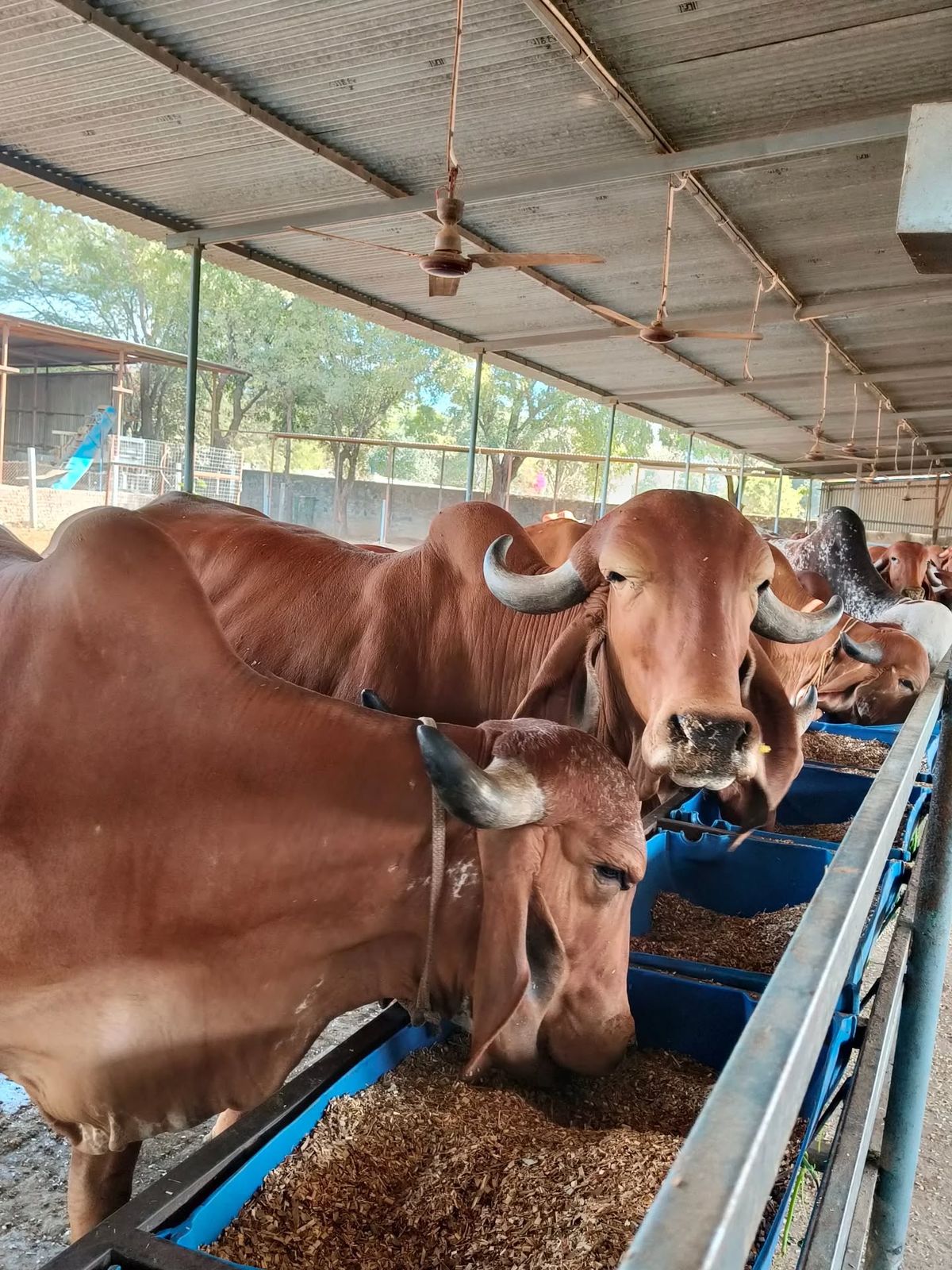
Most of what you need to know is printed on the pack or can be settled with one phone call. This guide covers seven checks worth doing before you buy, in the order we would do them ourselves. We make bilona ghee from our own Gir cows on our 25-acre farm near Jaipur, so the points on method and price come from that daily work.
"Ghee", "cow ghee" and "desi ghee" should all mean clarified milk fat and nothing else. Words such as "cooking medium", "vanaspati" or "dairy spread" describe different products, often made partly from vegetable oil, and they can sit right next to real ghee at a lower price.
Turn the pack over. If there is an ingredient list, it should mention only milk fat, or the cream or butter it was made from.
Added colour, added flavour or any vegetable fat on the list means the jar is not pure ghee.
Every packaged food sold in India has to carry the FSSAI logo and a 14-digit licence or registration number. You can type that number into FSSAI's FoSCoS website to see whose licence it is, whether it's still valid and what the business is allowed to make.
Ghee sold through Instagram pages and WhatsApp groups sometimes comes without one. Check before the first order, not after the third.
Cow ghee is pale to deep yellow, because cows pass beta-carotene from green fodder into their milk fat. Buffalo ghee is whiter and firmer. Both are genuine ghee, but they're different products, and a good label says which one you're buying. A pack that says neither is often a blend.
Breed claims need a bit more care. "A2" describes a protein in the milk of breeds like the Gir cow, and the difference between A1 and A2 milk is real. Clarifying butter into ghee removes almost all of that protein, though, so "A2" on a ghee jar tells you about the cows, not about something extra in the jar. If a pack claims a breed, it should also name the farm.
There are two common methods. In the bilona method, whole milk is set into curd, the curd is churned into makkhan, and the makkhan is heated slowly until it turns into ghee. In the cream method, a machine separates cream from the milk, and that cream or butter is heated into ghee. Most large dairies use the cream method.
Both give you legal ghee. Bilona ghee is slower and costlier to make. When it's set, it usually has a grainy, danedar texture and a nutty smell. If a label says "bilona", the seller should be able to explain the process, or better still, show it.
This is the check most buyers skip, and it is the quickest way to spot a label that does not match the product.
That's what it takes on our farm, and it's the same Gir cow milk we deliver to homes every morning. All of that milk has a cost before the first spoon of ghee exists. So a "Gir cow bilona ghee" priced close to ordinary supermarket ghee doesn't add up. Gir bilona ghee generally costs about 4 to 6 times as much as commercial ghee.
A high price doesn't prove purity on its own, so use it together with the other six checks.
Look for both a manufacturing date and a best-before date. If your family uses only a little ghee each week, two small jars bought a few months apart will taste better than one large tin.
Fresh ghee smells nutty, like butter cooked a little longer than usual. A sour, stale or soapy smell means it has started to turn rancid. FSSAI allows no more than 0.5% moisture in ghee, because water makes it spoil faster. That's also why a jar should come well sealed, in glass or a food-grade tin, and be stored away from heat and light.
Where are the cows kept? Can you see the herd or the churning? Do they have a recent lab report for the ghee? A lab report should include the Reichert-Meissl value and a negative Baudouin test, which checks for vegetable oil.
A real dairy can answer all three quickly. You don't need to be an expert to judge the answers either. Our guide on how to identify a Gir cow is enough to tell a Gir from a crossbred animal in a farm photo or video.
Each type has its place. What matters is that the label tells you the truth about which one you're buying.
| What to check | Cow ghee | Buffalo ghee | Blended or unlabelled |
|---|---|---|---|
| Colour | Pale to deep yellow | White to off-white | Anywhere in between |
| Texture when set | Soft, often grainy if bilona | Firmer and smoother | Varies from batch to batch |
| Smell when warmed | Nutty, light | Rich, heavier | Often faint |
| What the pack should say | "Cow ghee", ideally with breed and method | "Buffalo ghee" or "ghee" | Usually just "pure ghee" |
Colour alone won't settle it. Cow ghee is yellower in the green-fodder months and paler in the dry season, so a pale jar of cow ghee isn't automatically fake.
Once the jar is home, a few simple checks can confirm what the label told you. Melt a spoonful in a pan. Pure ghee melts quickly into a clear golden liquid and leaves no film or residue behind. Let a little set in a cool spot and look for an even, grainy texture. And trust your nose: real ghee fills the kitchen with a warm, nutty smell when you heat it.
These are good hints, but no home ghee purity test is proof. Only a lab can confirm purity. We've explained six home checks in detail, along with the two lab numbers worth asking for, in our post on Gir cow ghee and how it differs from regular ghee. Milk has the same problem, and our guide to spotting real and fake milk covers that side of the dairy.
Our pure cow ghee is made only from the milk of our own Gir cows on Niwaru Road, Jhotwara. We set the milk into curd, churn it the bilona way and heat the makkhan slowly, and we're FSSAI certified. If you're unsure about any of the seven checks above, ask us. You can call +91 98291 82649 or use our contact page, and we're happy to go through every one with you.
Start with the pack. Look for a 14-digit FSSAI number, a label that names the milk and the method, and an ingredient list with nothing but milk fat on it. Then check that the price is realistic for that method.
No. A grainy texture is typical of slow-made cow ghee, but texture can be imitated and it changes with temperature. Treat it as one sign among the seven, not as proof.
Neither is fake. They simply suit different uses. Cow ghee is lighter and yellower, while buffalo ghee is richer and whiter. Many families pick cow ghee for children and elders, and our article on ghee in pregnancy covers how much is sensible when you're expecting.
It takes 20 to 25 litres of whole milk to make 1 kg of bilona ghee, along with hours of setting, churning and slow heating. That's why Gir bilona ghee usually costs about 4 to 6 times as much as commercial ghee.
There's no single best brand. The best cow ghee for your family is one that names its milk and method, shows a valid FSSAI number, is priced sensibly for that method and smells fresh when you open it. Bilona ghee from a named breed such as Gir usually costs 4 to 6 times as much as commercial ghee.
No. Ghee with less than 0.5% moisture keeps for months at room temperature if the jar is airtight, kept away from heat and light, and only ever opened with a dry spoon.
FSSAI sets limits for ghee that include a maximum of 0.5% moisture and a minimum Reichert-Meissl value, which varies by state. Every pack also needs a 14-digit licence or registration number on its label.