
Your grandmother's milk grew a thick layer of malai. Thick enough to lift off with a spoon and collect in a steel dabba all week, until there was enough to churn into white butter. Your packet doesn't do that. Same cows, more or less. Same country. So what changed?
Homogenisation changed. And hardly anyone explains it properly, because the difference between pasteurized and homogenized milk usually gets written up by equipment companies who care about the equipment, or by American food blogs that have never heard of malai. Neither one is much use standing in a Jaipur kirana at seven in the morning.
The short answer
Pasteurisation is heat. Homogenisation is pressure. Pasteurisation heats milk to about 72°C for 15 seconds to kill disease-causing bacteria. Homogenisation forces milk through a narrow valve at 100 to 250 bar to smash the fat globules small enough that cream can never rise again.
One is a safety process. The other is a cosmetic one. Almost every packet in India has had both done to it, and only one of them was for your benefit.
Pasteurized milk is milk that has been heated to a set temperature for a set time to kill pathogens, then cooled quickly. That's the whole idea. It's named after Louis Pasteur, it has been standard practice for over a century, and it's the single reason milk stopped killing children in cities.
Three methods matter in India.
| Method | Temperature and time | Shelf life |
|---|---|---|
| LTLT or batch | 63°C for 30 minutes | Short, a few days chilled |
| HTST or flash | 72°C for 15 seconds | Around 2 to 5 days chilled |
| UHT | 135 to 140°C for 2 to 4 seconds | Months, unopened, no fridge |
Most Indian dairies use HTST for pouch milk, and I'd add that the number on your pouch is a minimum rather than a promise, because what happens to that milk between the plant and your gate is a cold chain nobody shows you and the reason so many households still boil out of habit. UHT is what's inside those tetra packs sitting unrefrigerated on the shelf, which is also why they taste faintly cooked. That flavour isn't your imagination. Heat that high changes the proteins.
What pasteurisation doesn't do is separate the cream, remove the fat, or alter the size of anything. A pasteurised, non-homogenised bottle will still throw a cream line by morning. Grandmother's milk was pasteurised too, at home, in a steel pot, every single day.
Pressure, not heat.
Homogenized milk is milk whose fat globules have been broken into pieces too small to float. No heat involved, no bacteria killed, nothing made safer. It's a mechanical process with one job: stop the cream separating.
Here's the physics, and it's simpler than the dairies make it sound. Untreated cow milk fat globules run about 3.5 micrometres across. Fat is lighter than water, so given a few hours they drift upward and form the malai layer. Homogenisation pumps the milk through a tiny valve gap at very high pressure, and the shear tears those globules down to under 1 micrometre. At that size they stay suspended more or less permanently.
Something else happens in that valve that almost nobody mentions. The new, smaller globules can't keep their original membrane, because there's suddenly four to six times more fat surface area to cover. So they get coated instead with whatever protein is floating nearby, mostly casein. The fat in homogenised milk is wearing a different jacket to the fat in raw milk. Hold that thought for the paneer section, because it explains a lot of failed kitchen experiments.
So here they are together.
| Pasteurisation | Homogenisation | |
|---|---|---|
| What it uses | Heat | Pressure, 100 to 250 bar |
| Purpose | Kill harmful bacteria | Stop cream from separating |
| Is it for safety | Yes | No |
| Changes shelf life | Yes, extends it | Barely |
| Changes fat content | No | No |
| Changes fat globule size | No | Yes, 3.5 microns to under 1 micron |
| Malai still forms | Yes | No |
| Legally required in India | For packaged milk, effectively yes | No |
Read the middle rows again, because they're the ones that matter and they're the ones every article on this subject skates past. Homogenisation changes no nutrition, adds no safety and removes no fat. It changes what the milk looks like in the glass. That's the entire return on it.
The cream never left.
It's still in there, just permanently dispersed. Homogenised milk has not been skimmed. The fat is exactly where it was, chopped fine and spread through the liquid so evenly that it can't collect at the top.
And dairies do it for reasons that are perfectly rational from their side of the counter. A uniform white liquid looks fresher on a shelf. Nobody rings up to complain about lumps. Every pouch pours the same, so the last glass tastes like the first. And a customer who can't see a cream line can't judge fat content by eye, which matters more than dairies like to admit.
What it cost you is the thing your grandmother did every week. You can't lift malai off homogenised milk, so you can't make white butter at home, so you buy butter. And ghee. And cream. Three things a household used to produce from one pouch.
I find that genuinely annoying, and I'm aware that isn't a scientific position.
Non-homogenized milk is milk that has been pasteurised for safety but never put through the pressure valve, so the cream still rises. On the shelf it's often sold as cream top milk or cream line milk. Shake the bottle before pouring and it behaves like ordinary milk. Leave it alone and it separates, which is the point.
It isn't raw milk. That confusion costs people money and occasionally health. Raw is unpasteurised and carries real risk. Non-homogenised is fully pasteurised and completely safe, it simply skipped a cosmetic step.
Glass bottle and can-delivery dairies, mostly. Not the supermarket. The big cooperative pouches are homogenised nearly without exception, so you're looking at direct-from-farm operations, which in practice means morning and evening home delivery rather than a shop.
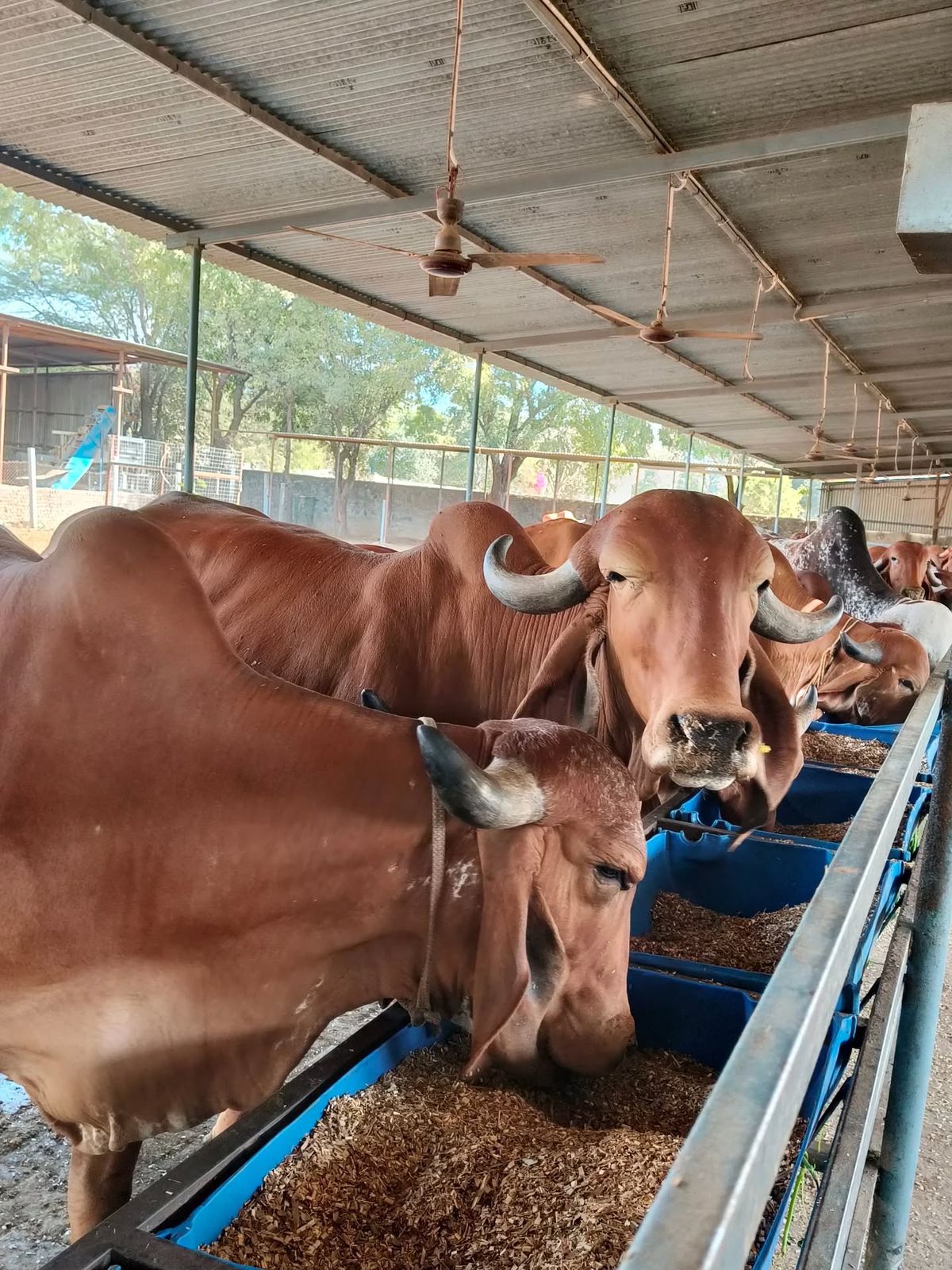
Our own Sunrise A2 Milk is pasteurised and not homogenised, from Gir cows here in Jaipur. You will see the cream line the next morning. That's the honest test and I'd rather you judge us on it than on a paragraph.
| Type | Heated | Homogenised | Cream line | Notes |
|---|---|---|---|---|
| Raw | No | No | Yes | Unregulated risk, boil it yourself |
| Pasteurised, non-homogenised | Yes | No | Yes | Safe, cream rises, best of both |
| Pasteurised and homogenised | Yes | Yes | No | The standard Indian pouch |
| UHT tetra pack | Yes, 135°C plus | Usually | No | Long life, cooked flavour |
Most Indian households have only ever met row three. I'd guess nine in ten.
Now the India-only part.
This is where we differ from every American article on this subject, and where most people get quietly short-changed. Under FSSAI rules, milk is graded by fat and solids-not-fat, and the name on the pouch is a legal category, not marketing.
| Category | Minimum fat | Minimum SNF |
|---|---|---|
| Cow milk | 3.5% | 8.5% |
| Buffalo milk | 6.0% | 9.0% |
| Full cream | 6.0% | 9.0% |
| Standardised | 4.5% | 8.5% |
| Toned | 3.0% | 8.5% |
| Double toned | 1.5% | 9.0% |
| Skimmed | Not more than 0.5% | 8.7% |
Now look at what's missing from that table. There's no column for homogenisation, because FSSAI doesn't require it and doesn't grade it. A dairy can homogenise or not and sell under the same category name either way.
So the pouch tells you the fat percentage but says nothing about whether you will get malai. Toned milk at 3% fat has plenty of fat in it. You just can't see any of it. Two pouches, same category, same price, completely different behaviour in your kitchen, and nothing on the front to distinguish them. Read the fine print on the back for the word homogenised.
On the current evidence, no.
I want to spend a moment on this one properly, because it's the question people actually type into Google at midnight, and both the wellness blogs and the dairy industry have an interest in answering it dishonestly in opposite directions. And I want to be careful here, because this is the question people actually type and the internet answers it badly in both directions.
Blame a hypothesis from the 1970s, usually credited to Kurt Oster, which proposed that homogenisation lets an enzyme called xanthine oxidase survive into the bloodstream, where it damages arterial tissue and causes heart disease. A tidy story. Also the reason your uncle keeps forwarding those messages.
It didn't hold up. A critique published in the American Journal of Clinical Nutrition worked through it point by point and found that absorption of dietary xanthine oxidase had never been demonstrated, that no relationship between homogenised milk intake and serum xanthine oxidase activity had been established, and that neither the liposome formation nor the intestinal absorption the theory depended on had been shown to occur. Later reviews reached the same place.
My honest position, then. Homogenisation isn't a health risk on any evidence we have, and anyone selling you milk on that basis, us included, would be overreaching. What I will say is that it's a change made for the seller's convenience and sold to you as normal, and you're allowed to prefer milk that has not had it done.
Yes, a few real ones, and I'd rather say so than pretend otherwise. It pours consistently, which matters for tea shops and industrial kitchens. You also get a slightly creamier mouthfeel at lower fat, because those tiny globules scatter light and coat the tongue differently. Some people find it a little easier on the stomach, though the evidence there's thin and I wouldn't build an argument on it.
If you drink milk mainly in chai and never think about it again, homogenised is genuinely fine. Most of India falls into that category and there's nothing wrong with it.
Safety-wise, no. Pasteurisation already killed the pathogens, and boiling it again mostly boils off some vitamins and changes the flavour. In most of the world people pour pasteurised milk straight from the fridge into a glass.
We boil anyway in India, and I'm not going to pretend that's irrational. Cold chains break. Pouches sit in the sun on a delivery cycle. A boil is cheap insurance against a gap you can't see, and for a lot of households it's also just how milk is supposed to smell in the morning. Boil it if you want to. Just know you're buying peace of mind, not safety you didn't already have.
If it's pasteurised, yes, exactly as safely as any other pasteurised milk. Homogenisation has nothing to do with it. If it's raw, boil it, no exceptions.
No. This one comes up constantly, so let me be plain about it. Once the globules are broken they don't reassemble. What you see after boiling homogenised milk is a thin skin of coagulated protein and fat, which isn't malai. Real malai is a cream layer that rises on its own while the milk sits cold. The skin on boiled packet milk forms on top of hot milk and is a different thing entirely.
Completely different things, and the marketing on both sides has made a mess of it. A1 and A2 refer to a beta-casein protein variant determined by the cow's genetics, decided before the milk ever leaves the animal, whereas homogenisation is a machine step applied afterwards in the plant, which means the two have no bearing on each other at all.
Which means asking whether A2 milk is better than homogenised milk is a bit like asking whether a red car is better than an automatic one. If you want the detail on the protein side, we have written it up separately in A1 vs A2 milk and is A2 milk good for digestion. Research on the digestive side is still developing and I'd treat confident claims in either direction with suspicion.
In practice, the dairies that bothered to keep A2 herds also chose not to homogenise, so the two travel together on the shelf, which is how a genetic fact about a cow and a decision about a machine ended up glued into one marketing phrase that neither of them earned. That's a business correlation, not biology.
Now the part I actually care about, and the part every article on this topic skips.
Homogenised milk sets a softer, sometimes slightly grainy dahi, because those casein-coated fat globules interfere with the protein network as it sets. Non-homogenised sets firmer with a cream layer on top. Neither is wrong. If your dahi has been loose since you switched pouches, this is probably why, not your culture. More on that in benefits of eating curd daily.
Yield drops with homogenised milk, noticeably. When you split milk with lemon or vinegar, the curd traps fat as it forms. Smaller globules wearing casein jackets escape into the whey instead of being caught, so you get less paneer and it comes out softer. Halwais know this. It's why the good ones don't buy pouch milk.
You can't make it the traditional way at all. The bilona method starts with collecting malai over several days, and homogenised milk gives you no malai to collect. This is the clearest example of a household craft that a machine step quietly ended. It's also why Bilona ghee costs what it does, and we have gone into what sets Gir cow ghee apart from regular ghee if you want the process.
Barely any difference here, honestly. Boiling and long steeping flatten most of it. If chai is your whole relationship with milk, buy whatever is cheapest and don't think about this article again.
Ask your paediatrician, not a dairy website. I mean that. Nothing about homogenisation makes milk unsuitable, but feeding decisions for infants aren't something I'm qualified to advise on and neither is anyone else selling you milk.
Three tests, in order of how much they tell you. First one's free.
Overnight in a glass. Pour some into a clear glass and leave it in the fridge overnight without disturbing it. Cream line by morning means non-homogenised. Flat and uniform means homogenised. This is the only test that can't be faked and it costs you nothing.
The label. Look on the back, not the front. The word homogenised will be there if it applies, usually in small type near the FSSAI category. Absence isn't proof, but presence is.
Ask the dairy. A farm that doesn't homogenise will tell you immediately, because it's the thing they're selling. Vagueness is its own answer.
One more thing. If what you're worried about is adulteration rather than processing, that's a different set of tests and we covered them in how to find out if your milk is real or fake.
Pasteurisation heats milk to about 72°C for 15 seconds to kill harmful bacteria. Homogenisation forces it through a valve at 100 to 250 bar to break the fat globules from around 3.5 micrometres to under 1 micrometre so cream can't rise. Pasteurisation is a safety step. Homogenisation is a cosmetic one.
No. Whole or full cream describes fat content, which under FSSAI means at least 6% fat and 9% SNF. Homogenised describes whether the fat was broken up. Milk can be full cream and homogenised, or full cream and not.
No. Homogenisation removes and adds nothing. The fat percentage is identical before and after. It only changes the size of the fat globules, which is why the cream stays invisible.
Two reasons. Homogenisation spreads fat evenly across every sip, changing mouthfeel. And if it's a UHT tetra pack, heating to 135°C or above alters the proteins and creates a faintly cooked flavour that doesn't go away.
You can, but yield is lower and the paneer is softer. Smaller fat globules coated in casein escape into the whey rather than being trapped in the curd. For firm paneer, non-homogenised milk works considerably better.
No. A cream line is what unhomogenised milk is supposed to do and it's a sign the fat is intact. Spoiled milk smells sour and forms lumps through the body of the liquid, not a smooth layer on top. Shake it and it mixes back in.
No. Broken fat globules don't rejoin. The skin that forms on boiled packet milk is coagulated protein, not malai, and it forms on hot milk rather than rising on cold milk.
There's no good evidence that it's. The xanthine oxidase theory from the 1970s was examined and refuted, including in a critique in the American Journal of Clinical Nutrition which found the absorption the theory required had never been demonstrated.
No. A2 refers to a beta-casein protein variant that comes from the cow's genetics. Non-homogenised refers to processing after milking. They are independent, though many A2 dairies also choose not to homogenise.
It makes no difference. Fat content decides calories, not globule size. If you're cutting calories, choose toned at 3% fat or double toned at 1.5% and ignore homogenisation entirely.
Drink milk only in chai? Buy whatever is convenient. I mean that. This decision doesn't deserve your attention.
But if you set dahi, make paneer, want malai, or simply want to see what you're paying for, buy pasteurised non-homogenised milk. You're not buying safety, because pasteurisation already handled that. What you're buying back is the ability to see the fat you paid for, and use it.
That's the whole trade. One process protects you. The other removes the one thing you could see, taste and use, and paying full price for milk that hides its own cream is the strangest deal in the dairy aisle. Most people are making it without knowing there was a choice.
Pour a glass tonight and look at it tomorrow morning. The milk will tell you exactly what it's. If it comes up flat and you would rather see a cream line, book a two-day trial and compare the two side by side. Our full range of A2 products is here if you want the ghee and dahi as well.